01The console as instrument
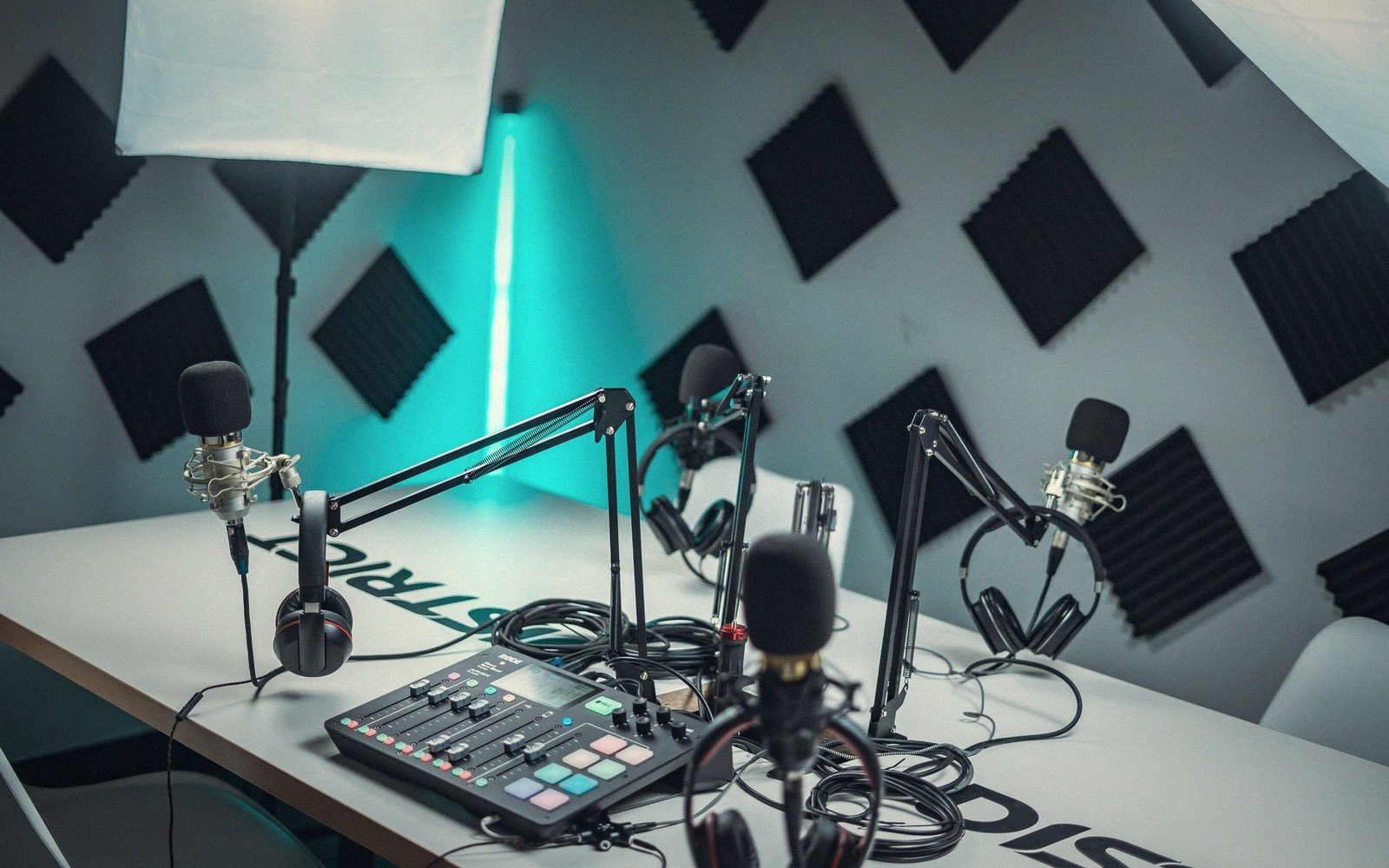
A broadcast mixing desk — the console, the board, the desk — looks intimidating until you understand that it does one thing: control which sounds reach the listener, and at what level. Every fader, every button, every cue point serves that single purpose. The complexity is just the number of sources a live radio hour demands.
Each channel strip handles one source: a microphone, a playback cart, a phone hybrid, a studio guest. The fader at the bottom of the strip is a linear gain control — push it up, that source gets louder in the programme mix. Pull it down and the source is attenuated, usually to silence. On a live desk the faders move constantly, because radio is a flow of sources handed off to one another in real time.
What separates a competent board operator from a good one is anticipation. The fader move has to be ready before the cue, not in response to it. You learn to read the shape of a piece of audio — where the intro ends, where the presenter will finish a link — and have your hands already in position.
02Cuing and channel assignment
Before anything goes to air it goes into the cue system, sometimes called pre-fade listen or PFL. Pull the PFL button on a channel and you hear that source in your headphones only, not on air, not in the studio speaker feed. This is how you check that a cart has loaded cleanly, that a guest's mic is actually working, that the phone caller's audio isn't clipping before you open the fader. It is a private audition, and it is the first line of quality control on every single element of a programme.
Either way the discipline is the same: the track must be at the right place before it is needed, not after.
Cuing a music track means finding the precise point at which useful audio begins — usually the very first transient of the intro — and marking it. On older systems this was done physically, with cartridge machines or reel-to-reel tape backed up by hand to the head. On a digital audio workstation the cue point is set as a marker, and the file will park itself there, ready to play on command. Either way the discipline is the same: the track must be at the right place before it is needed, not after.
Channel routing matters too. Most desks allow you to send sources to different buses: the main programme output, a record feed, a clean feed for a remote guest that omits their own voice to prevent echo. Getting this wrong — sending a microphone to the wrong bus, or forgetting to include a source in the record feed — creates problems that are very difficult to fix after the fact.
03Running a live hour
In practice, operating a desk during a live programme means managing a mental queue of what is playing, what is next, and what comes after that. A music track is playing: while it runs, you cue the next cart, confirm the level on the presenter's microphone, glance at the clock against the running order. The track ends; you cross-fade or butt-cut to the next element; the presenter opens. You ride their fader if the room acoustic is uneven or if they're moving relative to the mic.
Level discipline is the constant. Broadcast desks have a meter — traditionally a VU meter or a PPM, the peak programme meter standard used across European broadcasting — and keeping audio within its working range means the processor downstream has material it can handle cleanly. Too hot and the processor clips or pumps; too quiet and noise becomes audible.